



Your eight-year-old is sorting the laundry, and for once, without being asked. Socks on one pile, shirts on another, school uniforms folded separately. “It’s an algorithm,” she announces. “We learnt it in class. You break a big job into small steps.”
If words like “algorithm” and “AI” have started turning up in your child’s school bag, there’s a reason. From the 2026-27 session, CBSE schools are teaching computational thinking and artificial intelligence from Class 3 onwards. For many parents, it raises an obvious question: what exactly is a Class 3 child learning about AI?
If you’re comparing the best CBSE schools in Gurgaon, this guide explains what the new curriculum covers, how it’s taught and assessed, and how you can support it at home, often without a screen in sight.
What Has Changed?
On 1 April 2026, the Union Education Minister launched CBSE’s curriculum on Computational Thinking and Artificial Intelligence for Classes 3 to 8, to be taught from the 2026-27 session. It is mapped to NEP 2020 and the National Curriculum Framework for School Education 2023.
The curriculum is built in layers. Computational thinking comes first, and AI concepts follow in the higher classes. In the primary years, it is woven into existing subjects through activities, while Classes 6 to 8 are introduced to foundational ideas about AI.
CBSE has also made “Computational Thinking and Understanding AI” the training theme for teachers for the 2026-27 session, so schools are building teacher skills alongside the new lessons.
What Is Computational Thinking?
Computational thinking is a way of solving problems, not a computer skill. It’s the kind of thinking a programmer uses, but it’s just as useful for planning a birthday party or tackling a maths word problem. It usually rests on four ideas:
|
Idea |
What it means |
An everyday example |
|
Decomposition |
Breaking a big problem into smaller parts |
Splitting a school project into research, writing and drawing |
|
Pattern recognition |
Spotting what repeats or is similar |
Noticing that multiplication by 5 always ends in 0 or 5 |
|
Abstraction |
Focusing on what matters and ignoring the rest |
Drawing a simple map of the route to school |
|
Algorithms |
Writing clear, ordered steps |
Following a recipe, or giving directions to a friend |
Once children learn to think this way, AI becomes far easier to understand. At its heart, an AI tool finds patterns in large amounts of data and follows steps to make a prediction.
How It’s Taught and Assessed
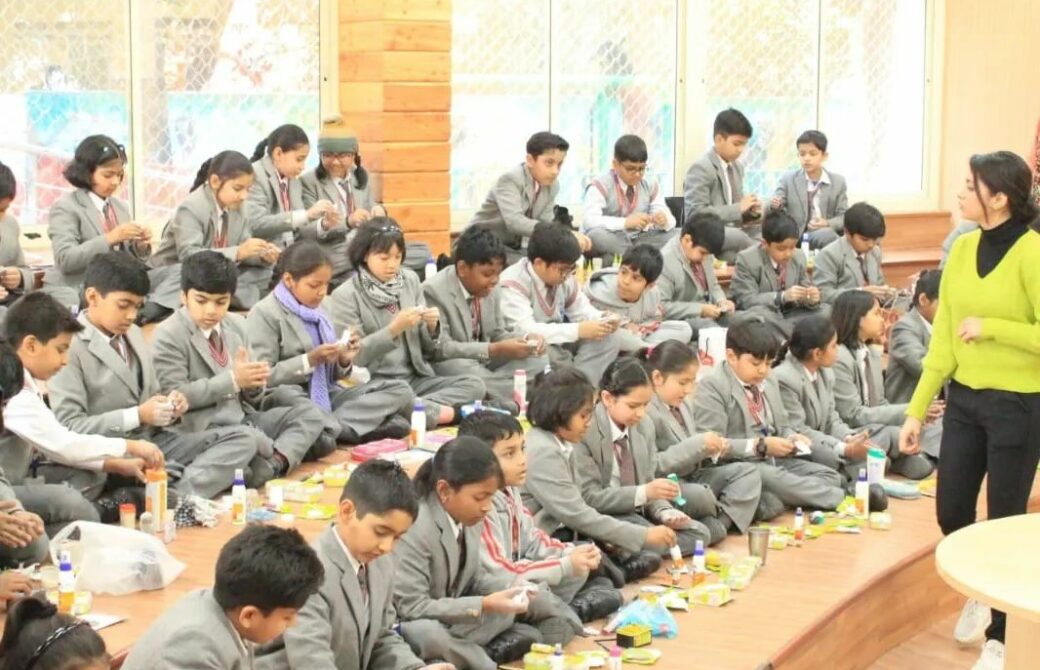
The curriculum is designed to be hands-on. According to the Ministry of Education, lessons use maths games, puzzles, worksheets and group tasks, with children breaking problems into parts and reading charts and diagrams. Much of it doesn’t need a computer at all.
Assessment moves away from memorising definitions. Teachers use written puzzles, group activities and a teacher observation journal to track how each child applies ideas, rather than how much they can recall.
The ethical side is part of the plan as well. Children learn that AI can be wrong, that it learns from data people provide, and that using it responsibly is a skill in its own right.
Where It Leads
For students who catch the bug, the path continues. CBSE already offers Artificial Intelligence as an optional skill subject in Classes 9 to 12. A strong grounding from Class 3 means that students who choose it later start from understanding rather than jargon.
Even for children who never write a line of code, the habits of breaking down a problem, spotting patterns and checking their steps carry across every subject.
AI Tools at Home: A Few Ground Rules
Children will meet chatbots and AI apps whether or not their school teaches them, so it helps to agree on some rules early:
- Check the age limits: Many popular AI chatbots set a minimum age of 13 in their terms, and some require parental consent for older teens.
- Use AI to understand, not to copy: Asking a chatbot to explain fractions is helpful. Asking it to write the homework isn’t.
- Check before you trust: AI tools can sound confident and still be wrong. Teach your child to verify facts with a textbook or a teacher.
- Keep personal details private: Never share names, photos, school details or addresses in AI chats.
Simple Ways to Build These Skills at Home
You don’t need gadgets to support this curriculum. Some of the best practice happens around the house:
- Ask your child to write step-by-step instructions for making a sandwich, then follow them exactly as written. The giggles teach precision.
- Play chess, Sudoku, or board games that reward planning and spotting patterns.
- Spot patterns together in rangoli designs, calendars or car number plates, and ask your child to predict what comes next.
- Let your child plan a short family outing, breaking it into tasks, timings and costs.
Frequently Asked Questions
1. Is there a board exam for this subject?
No. Classes 3 to 8 don’t have board exams. Progress is tracked through puzzles, group activities, and teacher observation during the year.
2. Does my child need a laptop or tablet at home?
Not necessarily. Much of the computational thinking work is “unplugged,” using puzzles, games and worksheets.
3. Is it too early to teach AI in Class 3?
Class 3 students focus on thinking skills rather than technology. AI concepts are introduced gradually in the higher classes.
4. Will my child learn to code?
The focus is on problem-solving first. Many schools add coding through clubs and activities for children who want to go further.
To Sum Up
CBSE’s new curriculum isn’t about turning eight-year-olds into programmers. It’s about teaching them to think clearly, solve problems step by step, and use technology with understanding and good judgement. With a little support at home, children often find this the most enjoyable part of their week.
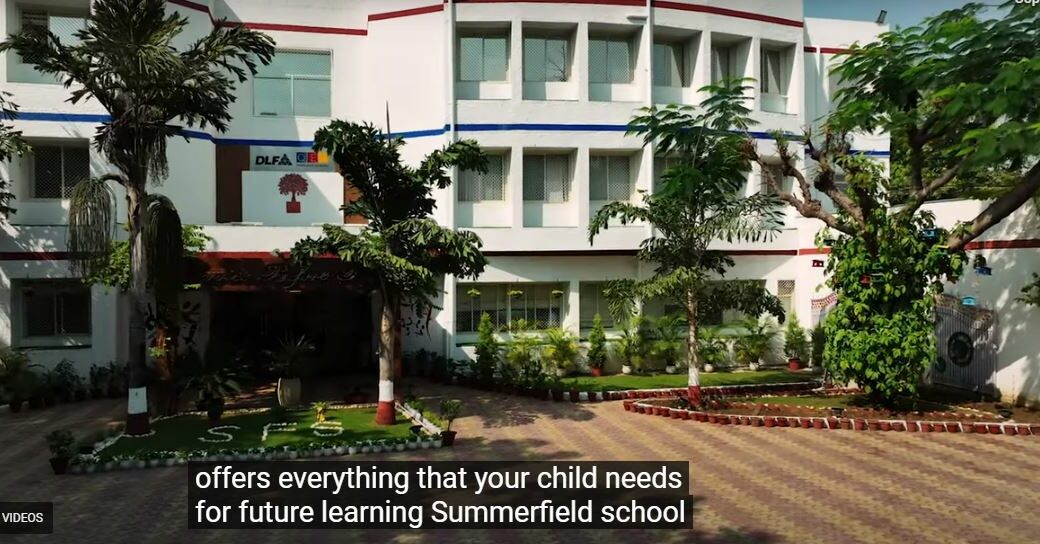
For families weighing up the best CBSE schools in Gurgaon, a school’s tech culture matters as much as its timetable. At Summer Fields School, Gurugram, a Microsoft Showcase School, students explore Scratch, Minecraft and AI-based learning apps in our Computer Club, and Science Club members learn Python. Each year, we also host CyFerNode, our inter-school technology fest, whose fourth edition brought together over 20 Delhi-NCR schools for coding, robotics and 3D modelling events. Explore CyFerNode or call us on +91-124-2353687 to see how we bring these skills to life.