

Choosing a school is one of those decisions that seems to arrive all at once. One day your child is learning to hold a crayon, and the next you are comparing admission forms, bus routes, and fee sheets, and wondering how anyone gets this right.
Most parents searching for the best schools in Gurgaon for their child focus on the admission season, and that’s natural. But a school isn’t a one-year decision. If things go well, it’s a place your child will walk into almost every morning for about fifteen years, from the first wobbly day of Nursery to the last board exam in Class 12.
This guide follows that whole journey, stage by stage. It covers what to look for before you apply, what changes as your child grows, and which decisions tend to sneak up on families. Read it in one go, or jump to the stage your child is in right now.
Stage 1: Before You Choose a School
Start With Your Family, Not the Brochure
Before you look at a single prospectus, write down what matters to your family. For most Gurgaon parents, distance comes first. A 15-minute commute and a 50-minute commute feel very different when your child is six, and even more different in the November smog or the July rains.
After that, think about the board, the size of the classes, the timings, and whether you will need school transport. Once these basics are clear, comparing schools becomes much simpler.
Understand How School Years Are Now Organised
The National Education Policy 2020 replaced the old 10+2 pattern with a 5+3+3+4 structure. Here’s how it lines up with the classes you’re used to:
| Stage | Classes | Approximate age |
| Foundational | Pre-primary (3 years) + Classes 1 and 2 | 3 to 8 years |
| Preparatory | Classes 3 to 5 | 8 to 11 years |
| Middle | Classes 6 to 8 | 11 to 14 years |
| Secondary | Classes 9 to 12 | 14 to 18 years |
It’s worth keeping this table in mind. Each stage asks something slightly different of your child, and of the school.
Visit More Than One Campus
A website shows you the building. A visit shows you the people. Watch how teachers speak to children in the corridor, how the classrooms feel when no one is performing for visitors, and how the staff answer your questions.
Take a written list along. Class sizes, how many teachers are in each section, how the school communicates with parents, and how it handles a child who is struggling are all fair game. If teacher-student ratios are high on your list, our article on assessing teacher-student ratios explains what the numbers actually mean.
Ask About Safety, Not Just Results
Board results are easy to compare. Safety is harder, but it matters more. Ask about CCTV coverage, gate security, the anti-bullying policy, and how the school transports children. It’s also worth checking whether school buses have GPS, CCTV and a trained lady attendant, all of which CBSE’s bus safety guidelines call for.
Stage 2: The Early Years (Nursery to Class 2)
Get the Age Right
From the 2026-27 session, Haryana requires children to be six years old for Class 1, and the earlier six-month relaxation has been removed. This changes the timing for many families, especially those with children born late in the year. Our guide to Class 1 admission age in Haryana [link with the relevant blog] explains what it means for Nursery and KG planning.
Look for Play, Not Pressure
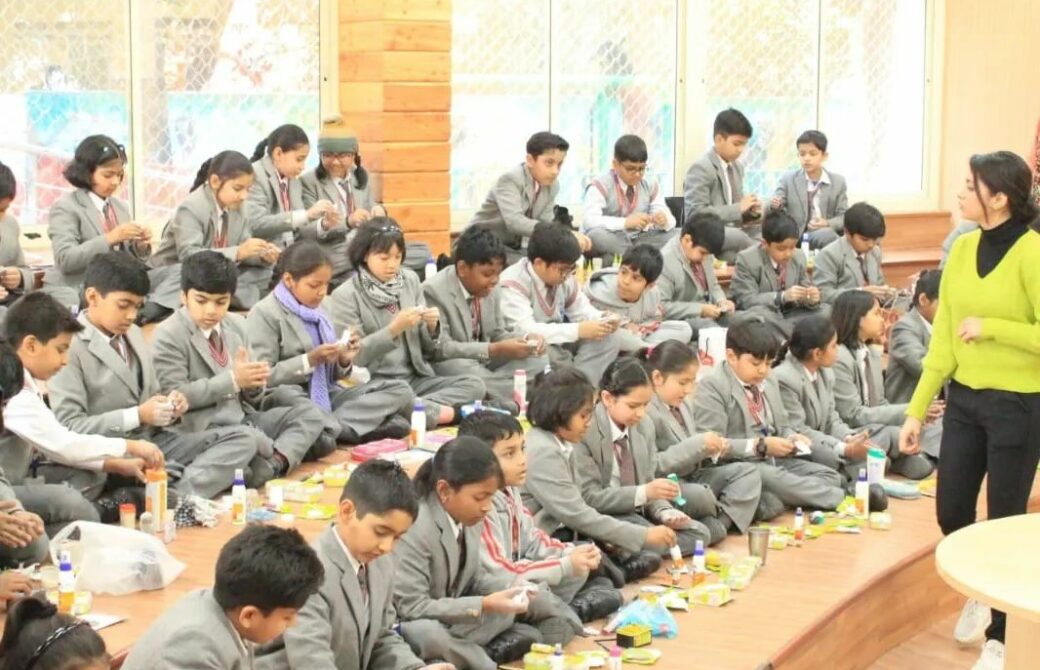
In the early years, children learn best by doing: building, sorting, singing, pretending and asking endless questions. A good pre-primary classroom will look busy and a little noisy, rather than silent rows of worksheets. That’s a good sign.
Build the Foundations at Home
Sleep is the most underrated part of school readiness. According to the American Academy of Sleep Medicine, children aged 6 to 12 need 9 to 12 hours of sleep a night, and teenagers need 8 to 10. A child who sleeps well tends to learn, behave and cope far better than one who doesn’t.
Stage 3: The Primary and Middle Years (Classes 3 to 8)
Routines Start to Matter
This is when homework, projects, tests and activities begin to stack up. Children who have a predictable after-school rhythm, with time for food, play, study and rest, usually manage the shift without much stress.
Plan for Gurgaon’s Seasons
Every family in the city learns this sooner or later: the school year here has a smog season. In November 2025, Gurugram’s district administration moved classes up to Class 5 to hybrid mode under Stage III of the Graded Response Action Plan. It helps to ask early how a school handles these weeks, from moving outdoor activities indoors to keeping lessons going if classes go online.
Stay Close to the Teacher
Middle school is where small worries can quietly grow into bigger ones, whether that’s a subject that has stopped making sense or a friendship that’s gone wrong. A quick conversation with the class teacher in month two is far easier than a long one in month eight. Strong parent-school collaboration makes a real difference here.
Stage 4: The Secondary Years (Classes 9 and 10)
Registration Is Not Just Paperwork
In CBSE schools, students are formally registered with the board in Class 9. This data, including name, date of birth and subjects, carries through to the Class 10 board exam, and the APAAR ID now has to be linked during registration. Check every detail carefully when the school shares the verification slip.
Board Exams Now Come With a Second Chance
From 2026, CBSE Class 10 students have a first board exam in February and an optional second exam in May to improve scores in up to three subjects. It’s a big change, and we’ve explained it in detail in our guide to CBSE’s two board exams for Class 10. [link with the relevant blog]
Watch the Stress Levels
A national NCERT survey of more than 3.79 lakh students found that 81% named studies, exams and results as a major source of anxiety. At home, steady sleep, regular meals, short breaks and fewer comparisons with other children usually help far more than extra hours at the desk.
Stage 5: The Senior Secondary Years (Classes 11 and 12)
The Stream Decision
Choosing between Science, Commerce and Humanities is often the first big decision a child makes about their own future. It’s worth taking slowly, with real conversations about interests, strengths and careers rather than what the neighbour’s child chose.
Balancing Boards and Entrance Exams
Many Class 11 and 12 students prepare for entrance exams alongside their boards. A school that plans its teaching with this in mind can save your child a lot of strain.
Changing Schools Along the Way?
Not every family’s plans line up with a single school for fifteen years. A job transfer, a house move, or a child who needs a different environment can all lead to a change.
Switching schools in the primary years is usually simple. It gets more complicated in Classes 9 to 12, where CBSE registration and board exam rules come into play. If you’re thinking about a move in these years, we recommend speaking to the new school before you start the paperwork.
Frequently Asked Questions
1. When should I start looking for a school in Gurgaon?
For Nursery, six to nine months before the session begins is a comfortable window. For higher classes, start as soon as you know a move is likely.
2. How many schools should I visit?
Two or three is usually enough to compare teaching styles, safety and the overall feel of a school.
3. Is it better to pick one school from Nursery to Class 12?
It often helps. Children who stay in one school avoid repeated adjustments, and teachers get to know them well over the years.
4. Should board results be the main factor?
They’re one factor. Teaching quality, safety, class sizes and how happy children seem on campus matter just as much.
To Sum Up
Finding the right school takes more than one visit or one admission form. When you know what each stage will ask of your child, from the first day of Nursery to the last board exam, every decision along the way feels far more manageable.
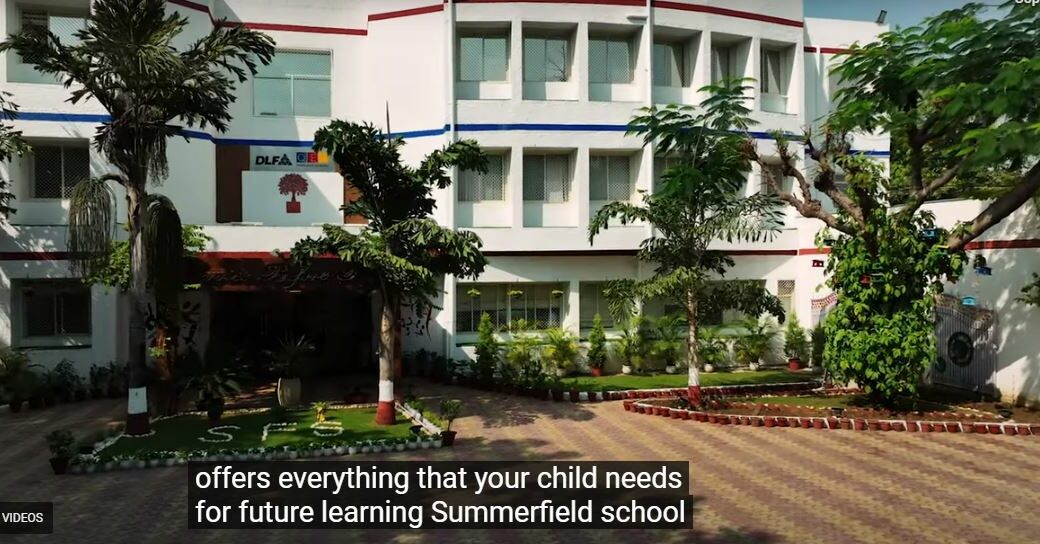
As you look for the best school in Gurgaon, trust what you see on your visits and ask every question on your mind. If you’d like a school that walks with your child through every stage, we’d love to welcome you to Summer Fields School, Gurugram. Set up under DLF management in 1987 and affiliated to CBSE (No. 530176), we teach children from Nursery to Class 12 across our Junior Wing (D Block) and Senior Wing (A Block). Schedule a school visit or call us on +91-124-2353687, and see what your child’s school journey could look like.