



Your daughter turned three in September. At the park last week, another mother mentioned that she had already registered her son at two schools and was “waiting for the interaction dates.” You came home, opened your laptop, and found a dozen school websites, each with its own form, deadline, and age chart.
If that feels overwhelming, you’re in good company. Nursery admission is the first time most families deal with a school’s paperwork, and nobody hands you a timetable for it.
If you’re looking for the best school in Gurgaon to begin your child’s school life, this planner breaks the season into simple steps. It covers how admissions work in the city, what to do each month, what to look for in a pre-primary classroom, and how to get your child ready for the first day.
How Nursery Admission Works in Gurgaon
Unlike Delhi, Gurgaon has no common admission schedule for private schools. Each school sets its own registration window, its own process, and its own age chart within the State’s rules. Registration for entry classes usually opens in the autumn, and popular schools can fill their Nursery seats early.
The practical upshot is simple: don’t wait for a single announcement. Make a shortlist, note each school’s dates, and track them yourself.
Age is the one question every family has to settle first. Our article on Class 1 admission age in Haryana explains how the new six-year rule for Class 1 affects the years before it, so it’s worth reading before you fill in any form.
A Month-by-Month Planner
Every school runs to its own calendar, so treat these as typical windows rather than fixed dates:
| When | What to do |
| October to November | Shortlist three or four schools near home and visit them |
| November to January | Collect prospectuses and submit registration forms |
| December to February | Attend interactions or orientation meetings, and receive offers |
| February to March | Pay fees, submit documents, and order uniforms and books |
| April | The new session begins, often with a short settling-in period |
Keep a simple sheet with each school’s registration deadline, fee payment date and contact person. When two schools ask for a decision in the same week, you’ll be glad you did.
What Children Actually Learn in Nursery
The National Curriculum Framework for the Foundational Stage, launched in October 2022, sets out what children aged three to eight should develop. It groups these into six broad areas, and a good Nursery programme touches all of them every week:
| Area | What it looks like in a Nursery classroom |
| Physical development | Running, climbing, threading beads and holding a crayon |
| Socio-emotional and ethical development | Taking turns, sharing, naming feelings and saying sorry |
| Cognitive development | Sorting, matching, counting objects and noticing patterns |
| Language and literacy | Conversations, stories, rhymes and recognising sounds |
| Aesthetic and cultural development | Music, dance, drawing, festivals and local traditions |
| Positive learning habits | Curiosity, concentration, finishing a task and tidying up |
When you visit a school, ask how a typical week covers these areas and how teachers record each child’s progress. At this age, observation notes, photographs and samples of a child’s work tell parents far more than any written test.
The Interaction: What It Is and What It Isn’t
Many schools meet families before confirming a Nursery seat. This is usually a short, informal chat with parents, sometimes with the child playing nearby.
There’s no need to coach your child or prepare answers. For Class 1, the Right to Education Act bars schools from putting a child or parents through any screening procedure at admission, and good schools bring the same spirit to Nursery. What the school really wants to know is whether you share its approach, and what your child will need to settle well.
Use the meeting to ask your own questions as well. It’s a conversation in both directions.
Seats Under the RTE Act
Under Section 12(1)(c) of the Right to Education Act, private unaided schools reserve 25% of their entry-level seats for children from economically weaker sections and disadvantaged groups. In Haryana, these admissions run through a separate online process on the State’s Ujjwal portal, not through each school’s own form. For the 2026-27 session, an application window for Nursery, LKG, UKG and Class 1 ran from 9 to 16 April 2026.
If your family may be eligible, watch for the State’s notice in early 2027 rather than waiting for individual school announcements.
Understand the Fees Before You Commit
The headline tuition figure rarely tells the full story. Ask each school for a written fee schedule that separates:
- One-time charges, such as registration and admission fees
- Annual charges
- Tuition fees, and whether they’re paid monthly or quarterly
- Optional costs, such as transport, meals and activities
- Any refundable security deposit, and how it’s returned
Also ask what happens if you accept a seat and then withdraw. A clear refund policy, given in writing, is a good sign.
Getting Your Child Ready for the First Day
The months between the offer and April are a gift. Use them gently:
- Practise short separations: An hour with a grandparent or a friend helps your child learn that you always come back.
- Build small bits of independence: Opening a tiffin box, washing hands, and putting on shoes all make school days easier.
- Talk about school positively: Read picture books about a first day, and walk or drive past the school together.
- Keep goodbyes short: On the day itself, a warm, quick goodbye works far better than a long, tearful one.
Some tears in the first week are normal, for children and parents alike. Most children settle within a few weeks once the routine feels familiar.
Frequently Asked Questions
1. Is registering the same as getting a seat?
No. Registration puts your application in the queue. A seat is confirmed only after the school completes its process, which may include an interaction and a document check, and you pay the fees.
2. Does my child need to know letters and numbers before Nursery?
No. Nursery is where these begin, through play and stories. Being able to say what they need, such as asking for water or the washroom, matters far more.
3. My child is shy with new people. Will that affect admission?
No. Shyness is common at three. A good school expects it and plans its settling-in period around it.
4. What if my child isn’t fully toilet-trained yet?
Tell the school honestly. Many three-year-olds are still learning, and staff are used to supporting them.
To Sum Up
Nursery admission feels big because it’s the first step, but it becomes manageable once you break it into months. Shortlist early, visit with a list of questions, read the fee schedule closely, and spend the last few weeks helping your child feel ready.
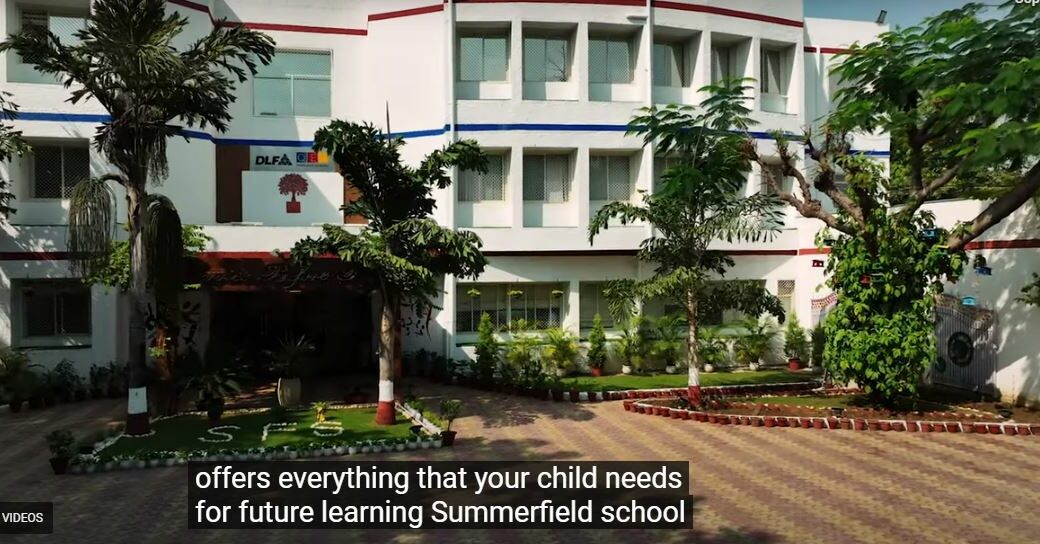
If you’re still searching for the best school in Gurgaon for your three-year-old, we’d love to show you around. At Summer Fields School, Gurugram, Nursery begins in our Junior Wing in D Block, DLF Phase I, where colourful, interactive classrooms, a dedicated kids’ play area and a paved drive-through for drop-off and pick-up make the first school years feel safe and familiar. Nursery admissions at our school are on a first-come, first-served basis, followed by an interaction with parents and the child and a check of documents such as the child’s Aadhaar card, birth certificate, and vaccination chart.
Keep an eye on our admissions page for the 2027-28 schedule, or call our Junior Wing on +91-8130754596 to book a visit.